Into the Deep End (Part 2)
Into the Deep End: From Cataphract Newb to Referee
Ongoing series about the life of a gamer in way over his head from Cody Bechberger/ HelloYesToast
Part 2: Cataphract Design Diaries
If you’re new to the series, it starts here and continues here. Apologies for the delay, this one took a bit more work...
 (Photo by Cullan Smith on Unsplash)
Alright, this is the moment that I decide to burn this blog to the ground. For those of you reading that are unaware, the whole reason this series exists is partly because of the actions of one person: Sam Sorensen. I have yet to decide if he's a hero or a villain in this story, and after reading a few of his pieces I think he'd rather exist in the middle. Early last year, Mr. Sorensen published a set of rules for a game he called Cataphract, named after a type of armoured, heavy cavalry—dude's a warfare nerd, I don't know what to tell you. Around the same time he started up a game using the rule set that he has since called Cataphracts. Don't mix them up, you will be laughed out of many servers for using the wrong one.
Anywho, I've decided that the next step in this learning journey was to go back to the beginning and read the actual writings about the game from the man himself…real original, I know. As of today, I believe he has only written 3 but I'm sure I'll get told very quickly that I'm wrong once this gets published. So at least for the moment we are going to talk about the “Cataphracts Design Diary #1-#3”.
I could be a hack and run through what's in each entry to flesh out word count but it's the holidays and I'm tired and I like to think most people reading this are smart enough to see that as a waste of time. For the sake of reference though, here's a basic idea of what is in each diary:
- background, coming up with the idea
- building your own game
- running it as a referee
The bulk of my thoughts center around diary #1 as this is where I've learned the most that seems useful and interesting for where I'm currently at, but there are some very good points made in #2 and #3 that I'll be calling out as we go. Also, I think I should probably say this now but nothing I'm about to write is meant in judgement. I do not think I know better than Mr. Sorensen on any of these topics and I frankly do not have the knowledge basis to engage in a useful discussion. This is simply an exploration of the ideas presented in the hopes of getting a better understanding of the game itself and to hopefully become a better referee as a result.
 Get your notes ready, nerds. (Photo by Towfiqu barbhuiya on Unsplash)
I think the most interesting thing that Mr. Sorensen mentions in Diary #1 is that Cataphract is designed to be a game centered around supply and logistics. He mentions the work of military historian Bret Devereaux, in particular his blog A Collection of Unmitigated Pedantry. Now I’m going to start by saying that I have only been preparing this entry for the past 2 weeks—over the holidays, no less—and thus have not had the time to delve into his 3-part series on logistics, or the 3-part, 5-entry series on commanding pre-modern armies. Not to say that they don’t sound interesting. If anything Mr. Sorensen’s diaries have given me a deeper appreciation for older styles of warfare, but I want to identify that I’m not very well versed in the subject matter and thus is a blindspot. Besides that, to quote Mr. Sorensen himself:
In military history, as Devereaux explains, there are basically three levels of decision-making: strategy (why you fight, the goals of the war), operations (how you get your soldiers to battle, how armies move), and tactics (how you win battles). It struck me, as Devereaux often alludes to, that there are a lot of games about strategy (Civilization, Diplomacy, the world map of Total War) and innumerable games about tactics (any given medieval strategy title or tabletop wargame), but very few about operations. Almost no games, as far as I’m aware, are interested in, say, the logistics of feeding an army, or communication structures between commanders in the field. Games usually simplify or skim over all those fine details of running a war, or just skip them entirely.
It amazes me that such a fundamental decision in the philosophy of creating the game could result in something that feels completely different, but it probably shouldn't. As I discussed in my last entry, the real-time aspect of the game results in situations where commanders can go for a long time without communicating. Letters take time to reach their destination, then take time to provide a response (assume they even make it), and marching across the continent is a slow and arduous process during which your forces constantly need to be fed. And that’s really it. That is the crux of the experiment that is the game Cataphracts: will players have an enjoyable time having to constantly feed their starving soldiers while remaining potentially isolated?
Obviously this isn’t the only thing to take away from the series; he has some very keen insights into how the role-playing elements of the game sprouted up and how the movement of information is one of the main things that players need to contend with to make meaningful decisions, and then I want to compare his set up at time of writing Diary #3 to what I’m currently seeing in Vanitera-450.
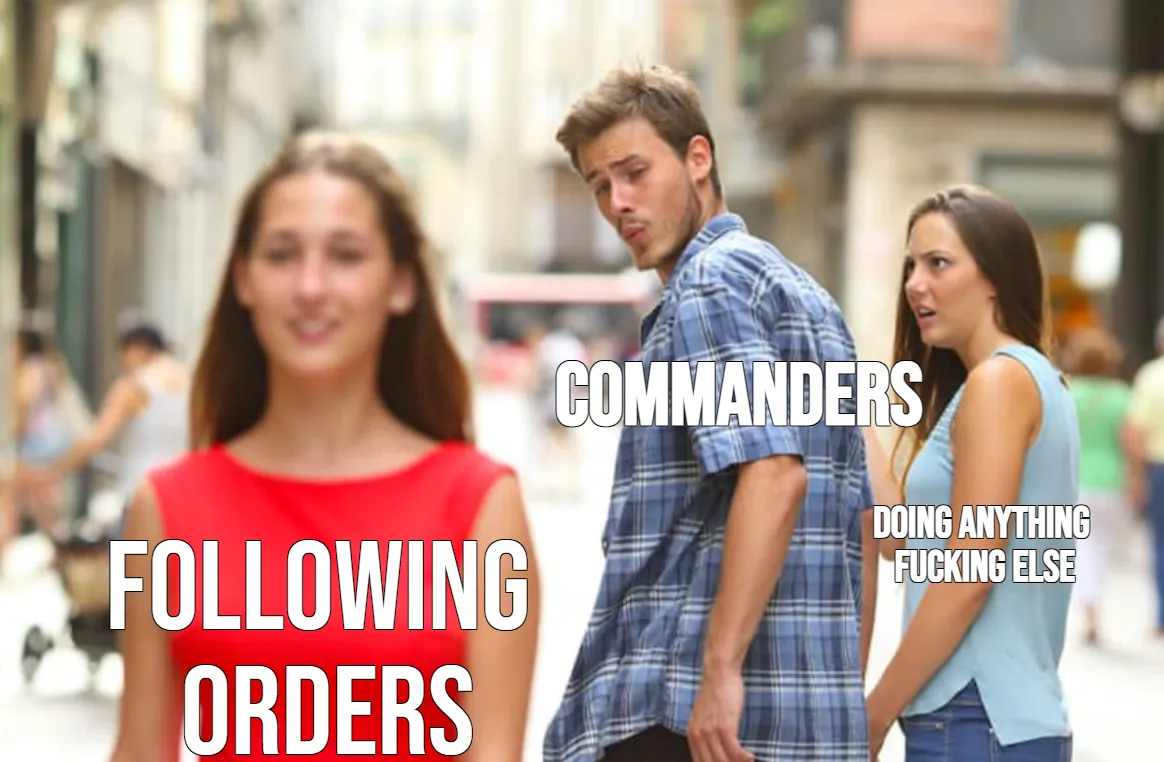
We all like to play pretend to a certain degree; I feel like that’s a pretty safe statement to make about the human race. We do it more obviously when we’re children and then it morphs and changes as we grow up, taking on different forms that are more or less visible. If you’re reading this then I think it’s safe to assume you’re at least familiar with tabletop or live-action roleplaying games where you would typically have a bespoke character that is created and you participate by following a set of rules or conventions. One of the things that Mr. Sorensen mentions as being the most interesting throughout the game of Cataphracts is how there was no real roleplay structure created for the game, nor any rules either. Every faction started with a single named character and a short back story. Each subsequent commander was then randomly rolled a name and association—along with things like age, traits, etc—with which they would interact with the game. He reports that most of his players found this genuinely enjoyable as the random assignment gave them a kernel from which to build their character but it also seemed to have developed beyond as the entire faction bonded into a strange sort of family. It goes even beyond that though, as he mentions an almost need to be loyal to someone, anyone, in the hopes that they can cling to some kind of truth either within their faction or without. It approaches etiquette; as the players constantly followed orders, worked out correct ways of treating prisoners, and created proper means of approaching and discussing topics diplomatically. All completely unprompted and without any kind of rules necessary.
 We still doing this one?
In and of itself, that's a very interesting discovery to make. It's even more interesting when we take into consideration the uncertainty that the players face. Mr. Sorensen mentions the Two Generals Problem, which is actually a computation thought experiment that maps on decently well. I'm going to butcher this but the idea is two generals on opposite sides of a fort need to attack at the same time to take it over, otherwise they'll lose. A valley sits between them which is full of bandits so any messages sent have a potential to be intercepted and thus not make it. Setting aside the additional layers of obfuscation to hide the message itself, the bigger question is how do you create an effective enough system between the two so that they're confident the other knows and will follow the plan. In reality, there comes a point at which you need to trust the other person enough to take the required action as the uncertainty of the system creates a feedback loop of sending confirmations of receipt and waiting to receive confirmation of receipt of your confirmation which will always eventually break down as a message will eventually be intercepted. In Cataphracts, Mr. Sorensen achieves this same uncertainty through the real-time movement of information and the use of external forces (weather, supplies) to make planning that much more difficult, reporting that the failure of players to live up to their promises comes not from intentionality or a lack of trying, but from an inability to plan around these various factors. Even still the players consistently try to remain loyal and stick to their plans as though they were beacons of light in the murky world of uncertainty. It also means that the players who seem to succeed the most keep their plans simple and do their best to plan for the uncertainty without reacting on impulse.
 A rogue commander being assassinated. (Photo by Joseph Ogbonnaya on Unsplash)
I'd now like to do a quick comparison on the differences between how Mr. Sorensen reports his experience refereeing Cataphracts vs the game I'm currently engaged in, Vanitera-450 (451 now, technically). Let's see if I can do this without accidentally committing cropsec…
For the sake of ensuring no one reading this who is currently playing in Vanitera can gain any actual advantage, I'm going to state here that I will not be using real numbers but close approximations for comparison. As of the posting of Diary #3 (July 2025), Mr Sorensen reported that Cataphracts has seen 39 commanders with about 10-12 orders issued a day, which he would typically check 2-3 times a day for 20-30 minutes at a time, but could put upwards of 2 hours or more into a much more politically active and engaging day. His self reported style as a referee is laissez-faire, keeping himself out of the roleplaying for the most part and focusing on executing orders efficiently. In comparison, Vanitera has almost 3 times the amount of active players currently, split into commanders and diplomats, and we deal with a total of 35-45 orders a day. Now there are 4 of us refereeing Vanitera, so that looks like it should map easily, but the number of orders for us does not include letters, while Mr. Sorensen’s does. With letters, our daily orders would increase probably 1.5-2 times. I point this out because it segues nicely into discussing the amount of time Vanitera currently takes to facilitate, which for me is typically between 2-3 hours a day without trying to wrangle a new system or unpack a large amount of rubberbanding left over from the weekend. And that's probably just for order facilitation, it doesn't take into account other interactions like answering questions and talking with players, other roleplaying, etc.

Please, I have a family...
There's a few reasons for why we're seeing this big of a difference between the games, but I want to focus on the following two:
Vanitera is a bigger, more complicated game 2 continents, more players, more actions and abilities, it all means that there's more for the players to try and thus more they want to do.
The players are more engaged Some people are practically living on the Vanitera; sending letters, writing notes and plans in their channel, scouring the rules and asking questions, and just hanging out in the out of character areas. It's awesome to see the community develop and love this thing that two of our referees have built off of the base rule set and as such there seems to be less “waiting to see” as Mr. Sorensen reported in Cataphracts.
So what does all this mean? Personally, I've found it fascinating to read more about the background of why and how the original game was built. It gives me a new appreciation into how Cataphracts and thus Vanitera actually work. Also, it's given me some more things to chew on in terms of trying to understand how these sorts of games should be best run, especially as more and more versions are created with different settings and rules complexities. The remix culture surrounding the Cataphract rule set is pretty amazing and as more experience is gained and tools are developed I'll be very excited to see where the community takes it in the years to come.
I'll end with another quote from the man himself that is extremely apt: “Running Cataphracts is sort of like having a large pet that lives on the internet. It’s a joyous, loud, confused, sometimes aggravating, sometimes amazing creature I am both required and privileged to tend to every single day.” Yes, I did use the first paragraph from Diary #3. Did I read the rest of it? That's up to you to decide. But this is very much how it feels. It's really awesome to know that I'm playing an integral part in allowing these 120 odd players to participate in such an outrageous experience… but it's also exhausting and can basically feel like a second job on the worst days. Just like this blog post I feel like most referees would agree that running the game can be a bit of a mess, but none of us would have it any other way.